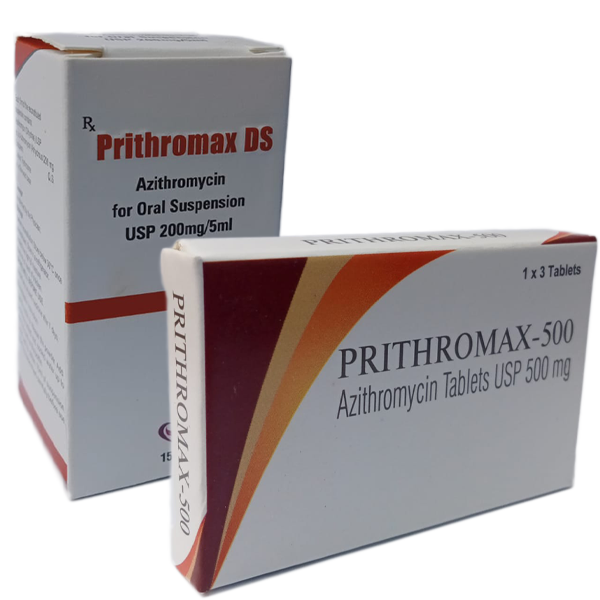
PRITHROMAX DS/500
Azithromycin 500mg Tablets
Azithromycin for Oral Suspension USP 200mg/5ml
Azithromycin is an azalide antibiotic derived by the incorporation of a methyl-substituted nitrogen atom into the lactone ring of the macrolide nucleus. This substitution imparts more favorable pharmacodynamic and pharmacokinetic properties to the drug, namely a wide antibacterial spectrum, greater tissue penetration and longer elimination half-life.
INDICATIONS:
PHARMACOLOGICAL ACTION:
The basic mechanism of action of azithromycin is inhibition of protein synthesis in the bacterial cell. Azithromycin binds reversibly to the 50S ribosomal subunit. This inhibits translocation of aminoacyl transfer - RNA and consequent protein synthesis.
PHARMACOKINETICS:
Following oral administration, Azithromycin is rapidly absorbed and widely distributed throughout the body. Rapid distribution into tissue and high concentration within cells result in significantly higher Azithromycin concentrations in tissues than in plasma or serum. The serum protein binding of azithromycin is variable, decreasing from 51% at 0.02 ug/ml to 7% at 2ug/ml. Biliary excretion of azithromycin, predominantly as unchanged drug, is a major route of elimination.
INDICATIONS:
- Treatment of infections caused by sensitive organisms.
- Lower Respiratory Tract Infections: Community - acquired pneumonias, acute bacterial exacerbations of chronic obstructive pulmonary disease, acute bronchitis due to Haemophilus influenzae, Moraxella catarrhalis or Streptococcus pneumoniae.
- Upper Respiratory Tract Infections: Ear, nose and throat infections, e.g. tonsilitis, sinusitis, otitis media and pharyngitis.
- Skin / Skin Structure Infections: Furunculosis, pyoderma and impetigo due to Staphylococcus auresu, S. pyogenes or S, agalactiae.
- Sexually Transmitted Disease: Due to N. gonorrhoae and C. trachomatis.
- Acute bacterial sinusitis (adequately diagnosed) acute bacterial otitis media (adequately diagnosed) pharyngitis, tonsillitis.
- Acute exacerbation of chronic bronchitis (adequately diagnosed) mild to moderately severe community acquired pneumonia skin and soft tissue infections uncomplicated Chlamydia trachomatis urethritis and cervicitis
PHARMACOLOGICAL ACTION:
The basic mechanism of action of azithromycin is inhibition of protein synthesis in the bacterial cell. Azithromycin binds reversibly to the 50S ribosomal subunit. This inhibits translocation of aminoacyl transfer - RNA and consequent protein synthesis.
PHARMACOKINETICS:
Following oral administration, Azithromycin is rapidly absorbed and widely distributed throughout the body. Rapid distribution into tissue and high concentration within cells result in significantly higher Azithromycin concentrations in tissues than in plasma or serum. The serum protein binding of azithromycin is variable, decreasing from 51% at 0.02 ug/ml to 7% at 2ug/ml. Biliary excretion of azithromycin, predominantly as unchanged drug, is a major route of elimination.