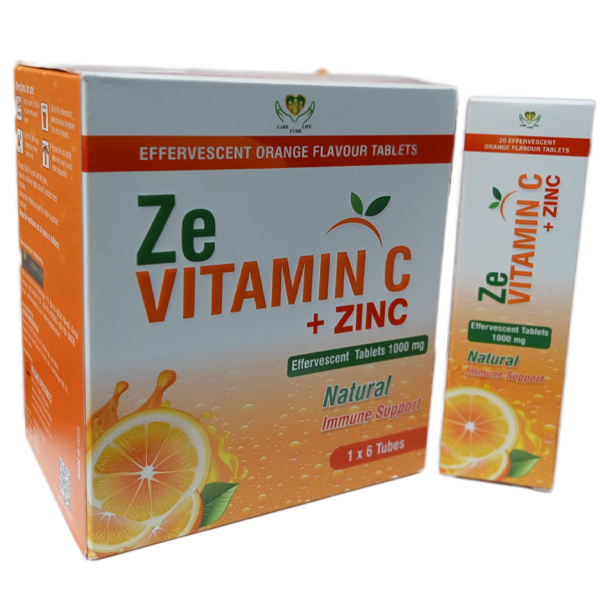
Ze VITAMIN C
VITAMIN C 1000 MG AND ZINC 10 MG TABLETS
Effervescent 1000mg Tablets
INDICATION
PHARMACOLOGICAL CLASSIFICATION
Ascorbic acid is an important water-soluble vitamin and antioxidant.
Zinc status is of major importance in maintenance of effective immune response, particularly T-cell-mediated response.
ATC Code: A11GB
Method of Action: Vitamin C
Ascorbic acid is an important water-soluble vitamin and antioxidant. Due to the low storage capacity of the body for vitamin C, a regular intake of sufficient amounts is essential to humans.
Ascorbic acid and its metabolite dehydroascorbic acid form a reversible redox system that is involved in many enzymatic reactions and forms the basis for the spectrum of action of vitamin C. Ascorbic acid functions as a cofactor in a number of hydroxylation and amidation reactions by transferring electrons to enzymes that provide reducing equivalents.
Zinc As with vitamin C, low levels of zinc may also adversely affect the healing rate of wounds, ulcers and decubitus. Zinc status is of major importance in maintenance of effective immune response, particularly T-cell-mediated response. DOSAGE AND ADMINISTRATION: Adults and children over 12 years: 1 effervescent tablet a day dissolved in a glass of water (200 ml)
CONTRA-INDICATIONS
WARNINGS
Drug interactions:
Ascorbic Acid:
Desferrioxamine: Vitamin C may enhance tissue iron toxicity, especially in the heart, causing cardiac decompensation.
Cyclosporine: Vitamin C may reduce cyclosporine blood levels.
Warfarin: High doses of vitamin C may interfere with the effectiveness of warfarin
Zinc:
Zinc forms complexes with certain substances (including tetracycline antibiotics, quinonolone antibiotics, penicillamine) resulting in decreased absorption of both substances.
As these interactions occur in the gastro-intestinal tract, the potential for interaction should be reduced by taking the product separately from other drugs. It is usually sufficient to separate the intake by at least 2 hours before or 4-6 hours after ingestion of the other drug, unless otherwise specified.
SIDE-EFFECTS
Fertility, pregnancy and lactation
Pregnancy and Lactation: The product is generally considered safe during pregnancy and lactation when used as labelled. However, since there are no sufficient controlled human studies assessing the risk of the product during pregnancy or lactation, the product should be administered in pregnancy or lactation only when clinically indicated and considered essential by the physician.
vVitamin C and Zinc are secreted into breast milk. This must be taken into consideration if the infant is receiving any other supplements Neither non-clinical nor clinical data are available to assess aspartame use in infants below 12 weeks of age.
- Treatment of vitamin C and zinc deficiency
- Enhance the immune system
- In Scurvy
- Provides Antioxidant support
- Chronic illness
- Boost up iron absorption
- Formation of antibody.
PHARMACOLOGICAL CLASSIFICATION
Ascorbic acid is an important water-soluble vitamin and antioxidant.
Zinc status is of major importance in maintenance of effective immune response, particularly T-cell-mediated response.
ATC Code: A11GB
Method of Action: Vitamin C
Ascorbic acid is an important water-soluble vitamin and antioxidant. Due to the low storage capacity of the body for vitamin C, a regular intake of sufficient amounts is essential to humans.
Ascorbic acid and its metabolite dehydroascorbic acid form a reversible redox system that is involved in many enzymatic reactions and forms the basis for the spectrum of action of vitamin C. Ascorbic acid functions as a cofactor in a number of hydroxylation and amidation reactions by transferring electrons to enzymes that provide reducing equivalents.
Zinc As with vitamin C, low levels of zinc may also adversely affect the healing rate of wounds, ulcers and decubitus. Zinc status is of major importance in maintenance of effective immune response, particularly T-cell-mediated response. DOSAGE AND ADMINISTRATION: Adults and children over 12 years: 1 effervescent tablet a day dissolved in a glass of water (200 ml)
CONTRA-INDICATIONS
- Hypersensitivity to any of the active substances or to any of the excipients.
- Patients suffering from or having a history of Nephrolitiasis must not take this product.
- Patients suffering from oxalate urolithiasis or oxaluria must not take this product.
- Patients suffering from severe renal insufficiency or renal failure must not take the product. This includes patients on dialysis.
- Patients suffering from Herochromatosis must not take this product.
WARNINGS
- Increased intake of ascorbic acid over a prolonged period may result in an increased renal clearance of ascorbic acid, and deficiency may result if the intake is reduced or withdrawn rapidly.
- Interference with serological testing
- Ascorbic acid may interfere with tests and assays for urinary glucose,- giving false-negative results with methods utilising glucose oxidase with indicator (e.g. Labstix, Tes-Tape) and false-positive results with neocuproine methods.
- Estimation of uric acid by phosphotungstate or uricase with copper reduction and measurement of creatinine in non-deproteinised serum may also be affected.
- High doses of ascorbic acid may give false-negative readings in faecal occult blood tests.
- Patients with rare hereditary problems of galactose intolerance, total lactase deficiency or glucose-galactose malabsorption should not take this medicine.
Drug interactions:
Ascorbic Acid:
Desferrioxamine: Vitamin C may enhance tissue iron toxicity, especially in the heart, causing cardiac decompensation.
Cyclosporine: Vitamin C may reduce cyclosporine blood levels.
Warfarin: High doses of vitamin C may interfere with the effectiveness of warfarin
Zinc:
Zinc forms complexes with certain substances (including tetracycline antibiotics, quinonolone antibiotics, penicillamine) resulting in decreased absorption of both substances.
As these interactions occur in the gastro-intestinal tract, the potential for interaction should be reduced by taking the product separately from other drugs. It is usually sufficient to separate the intake by at least 2 hours before or 4-6 hours after ingestion of the other drug, unless otherwise specified.
SIDE-EFFECTS
- Gastrointestinal disorders
- Diarrhoea, nausea, vomiting, gastrointestinal and abdominal pain.
- Immune System Disorders Allergic reaction, anaphylactic reaction, anaphylactic shock. Hypersensitivity reactions with respective laboratory and clinical manifestations include allergic asthma syndrome, mild to moderate reactions potentially affecting skin, respiratory tract, gastrointestinal tract and cardiovascular system, including symptoms such as rash, urticaria, allergic edema and angioedema, pruritus, cardio-respiratory distress, and severe reactions, including anaphylactic shock have been reported.
Fertility, pregnancy and lactation
Pregnancy and Lactation: The product is generally considered safe during pregnancy and lactation when used as labelled. However, since there are no sufficient controlled human studies assessing the risk of the product during pregnancy or lactation, the product should be administered in pregnancy or lactation only when clinically indicated and considered essential by the physician.
vVitamin C and Zinc are secreted into breast milk. This must be taken into consideration if the infant is receiving any other supplements Neither non-clinical nor clinical data are available to assess aspartame use in infants below 12 weeks of age.